
Paver Patios
A patio doesn't carry vehicle weight, so the questions that matter most are comfort, pattern, and how well the surface works with an irregular shape — not base depth for traffic loads. This page covers paver patios specifically; for the driveway application, see our Paver Driveways page.
The cost range above is a general published figure, not split separately for patios vs. driveways. Shape, pattern, and material choice move the number more than base depth for a patio — request a site-specific estimate.
Comfort and shape flexibility, not load-bearing
Lighter base, same soil to manage
No vehicle load means a lighter base than a driveway — but South Lake County's sandy soil still needs proper compaction underneath, or you'll see the same settling problems at a smaller scale.
Color and texture affect comfort
Lighter, textured units stay cooler underfoot than dark, smooth surfaces — a real consideration for bare feet on a patio in a way it rarely is on a driveway.
Built for irregular shapes
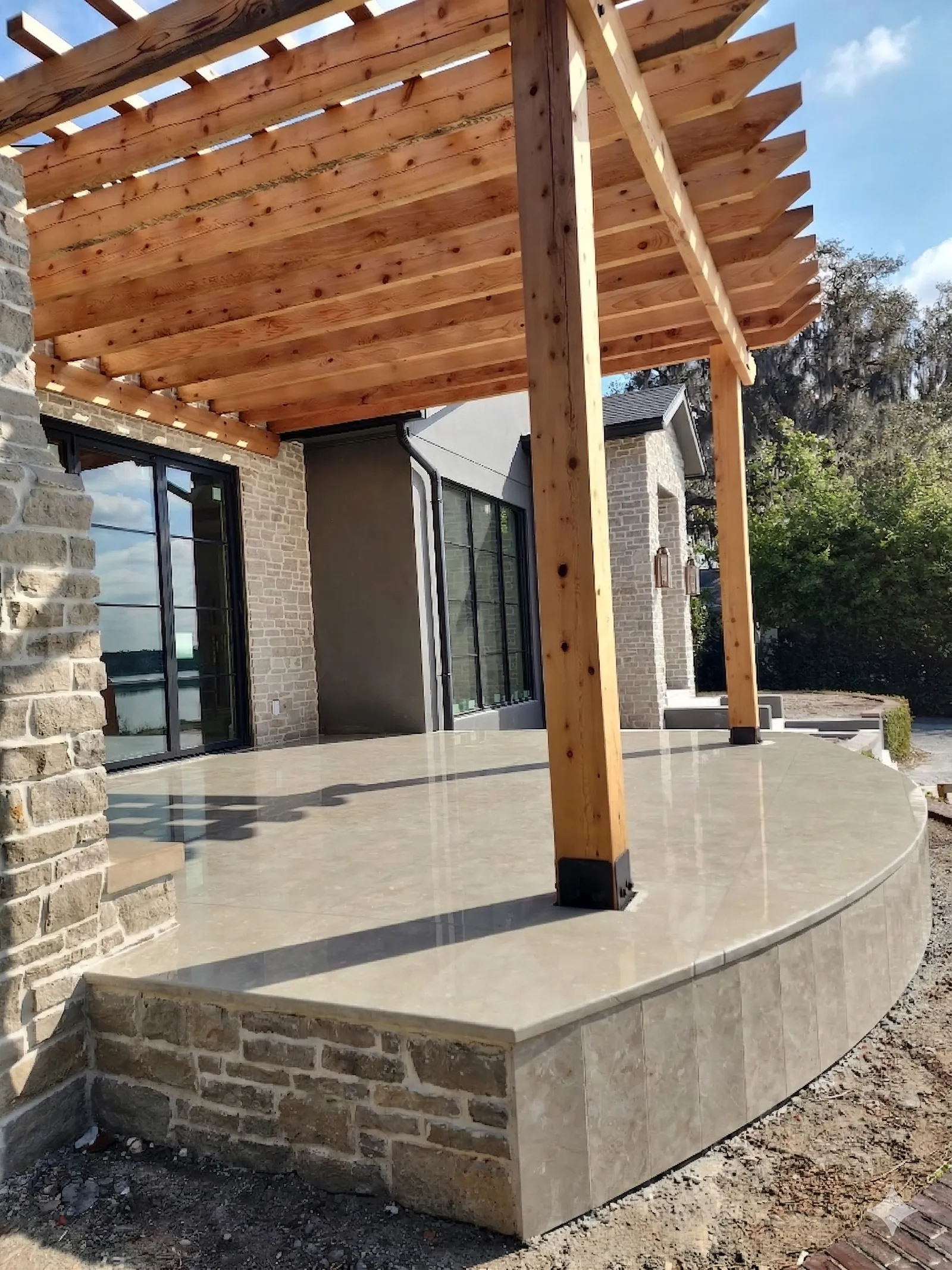
Curves, cutouts around existing trees, and multi-level layouts are more practical with individual units than with a custom concrete pour.
Paver patio questions
How much does a paver patio cost?
Pavers run a published $10–$30 per sq ft installed — that range isn't broken out separately for patios vs. driveways, but a patio's simpler base requirements often land it toward the lower-to-middle end compared to a driveway carrying vehicle loads. Shape and pattern complexity move the number more than base depth does for a patio.
Do paver patios need as deep a base as a paver driveway?
No. A pedestrian-only patio typically needs roughly 4–6 inches of compacted aggregate base, compared to the 6–8+ inches a vehicle-bearing paver driveway needs — see our Paver Driveways page for that comparison. Base prep still matters on South Lake County's sandy soil either way; it's just a lighter-duty version of the same principle.
Are paver patios more comfortable underfoot than concrete?
Lighter-colored and textured paver units tend to stay cooler underfoot than a dark, smooth-troweled concrete surface in direct Central Florida sun — the same heat-reflectance logic that applies to concrete finish choice applies to paver color choice. Neither material is immune to summer heat, but color and texture make a real difference for bare feet.
Paver patio or stamped concrete — which should I choose?
Our Stamped Concrete vs. Plain Patio comparison covers two concrete finishes specifically; pavers are a third path with their own trade-off — more pattern and color flexibility than either concrete option, individual units that can be replaced without disturbing the rest of the surface, but a higher upfront cost and periodic joint-sand maintenance neither concrete finish requires.
Can a paver patio be installed around curves or existing landscaping?
Yes — this is one of paver's practical advantages over a poured slab. Individual units can follow a curve or work around an existing tree or planting bed more easily than form-and-pour concrete work, without the cost premium a custom-shaped concrete pour usually carries.
Planning a paver patio?
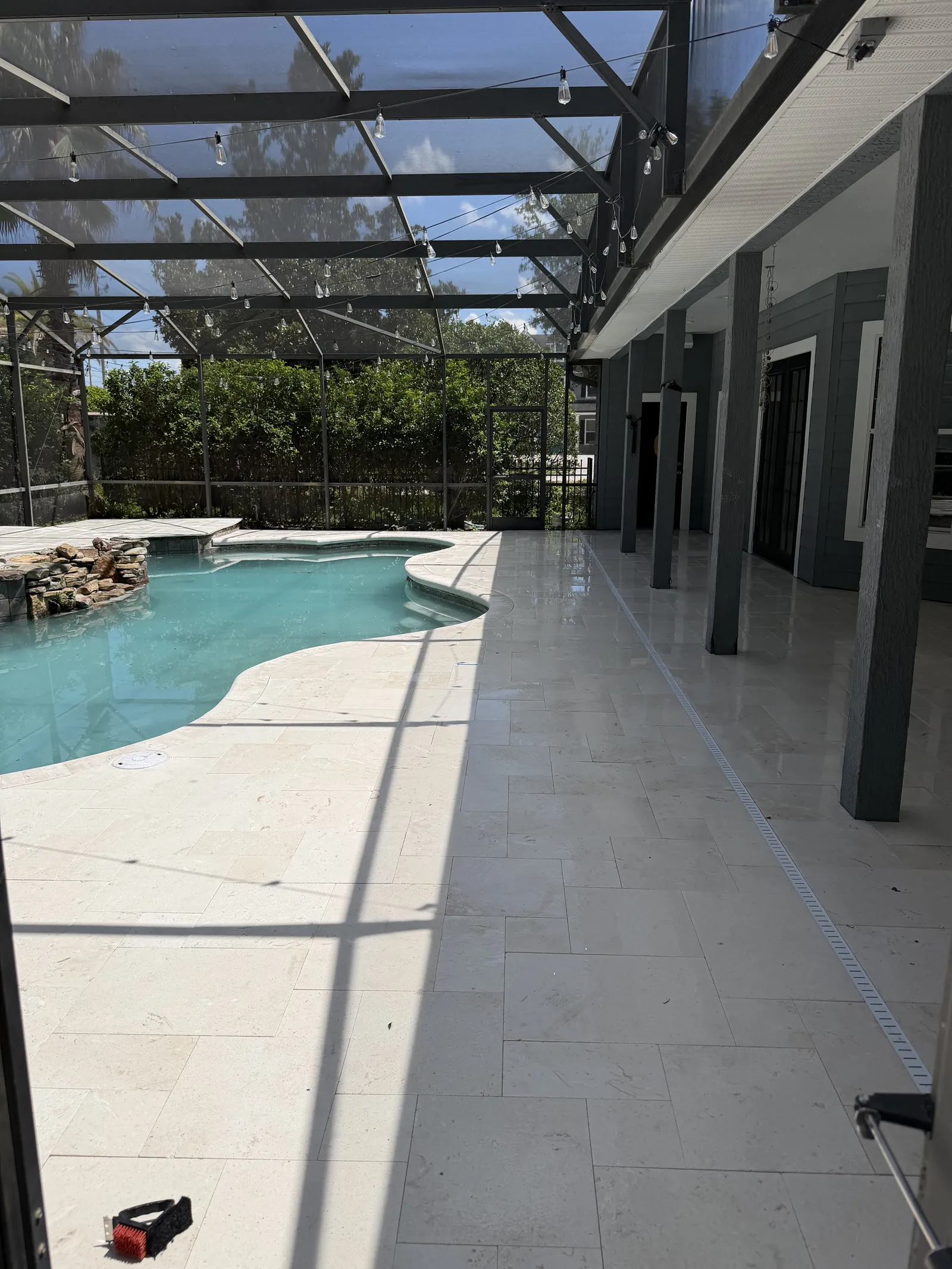
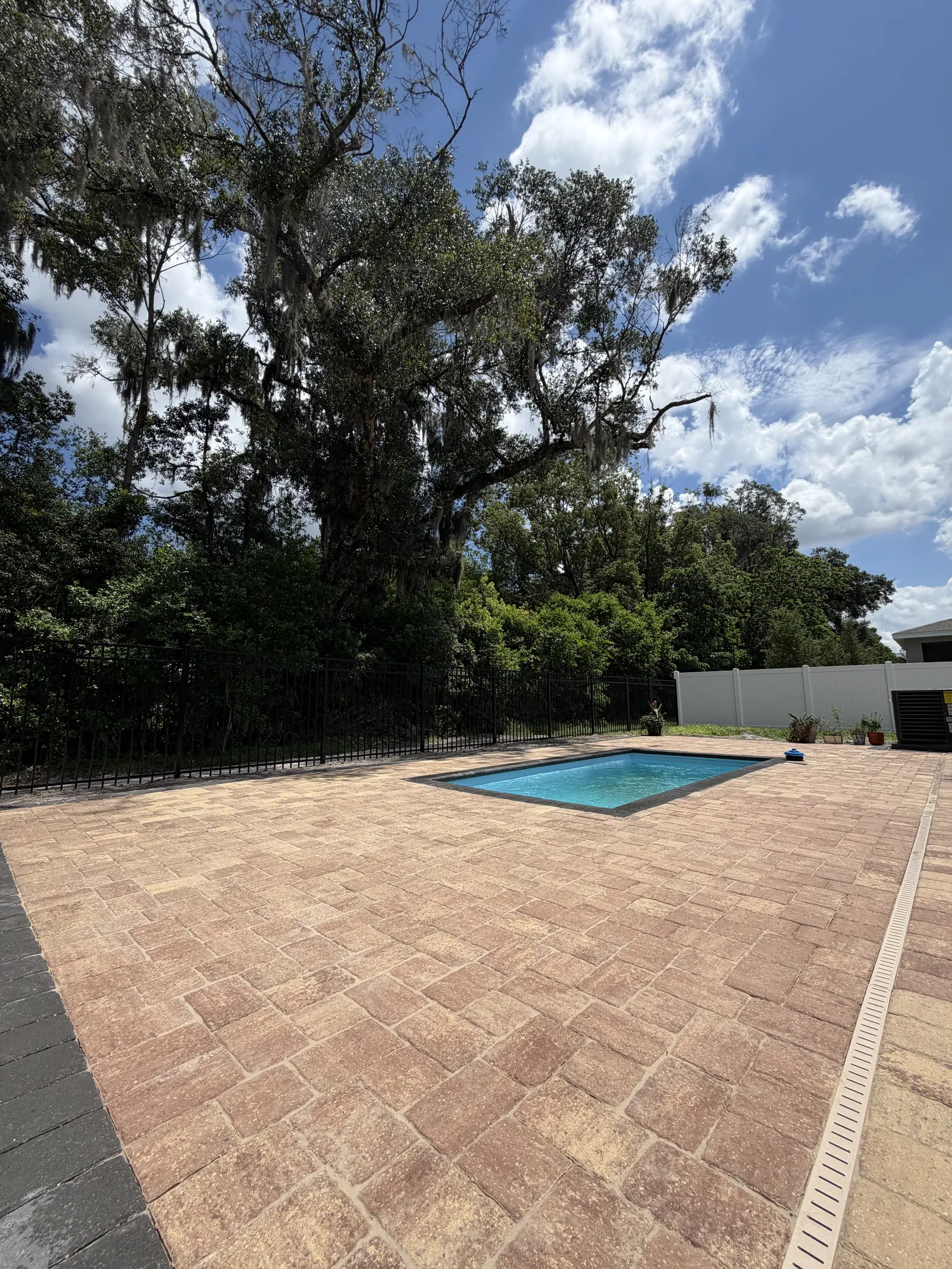
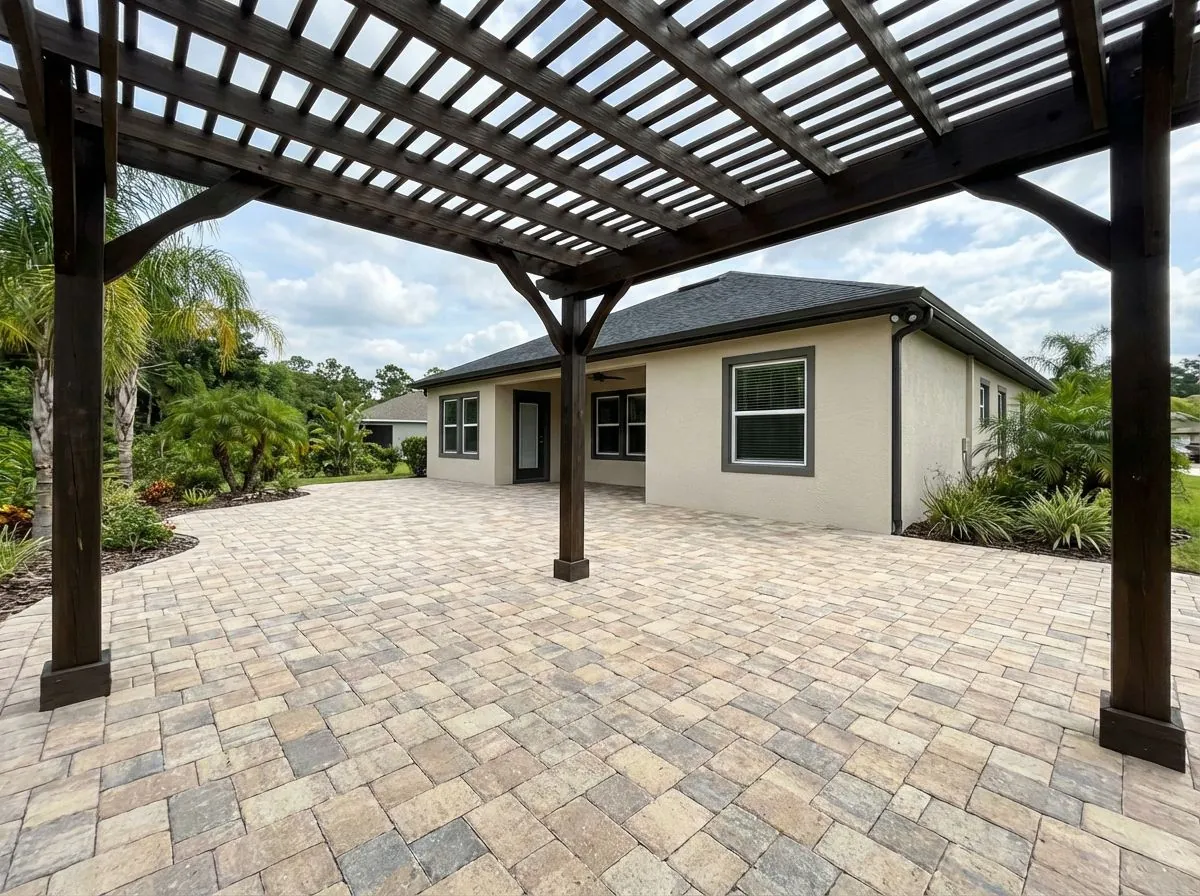
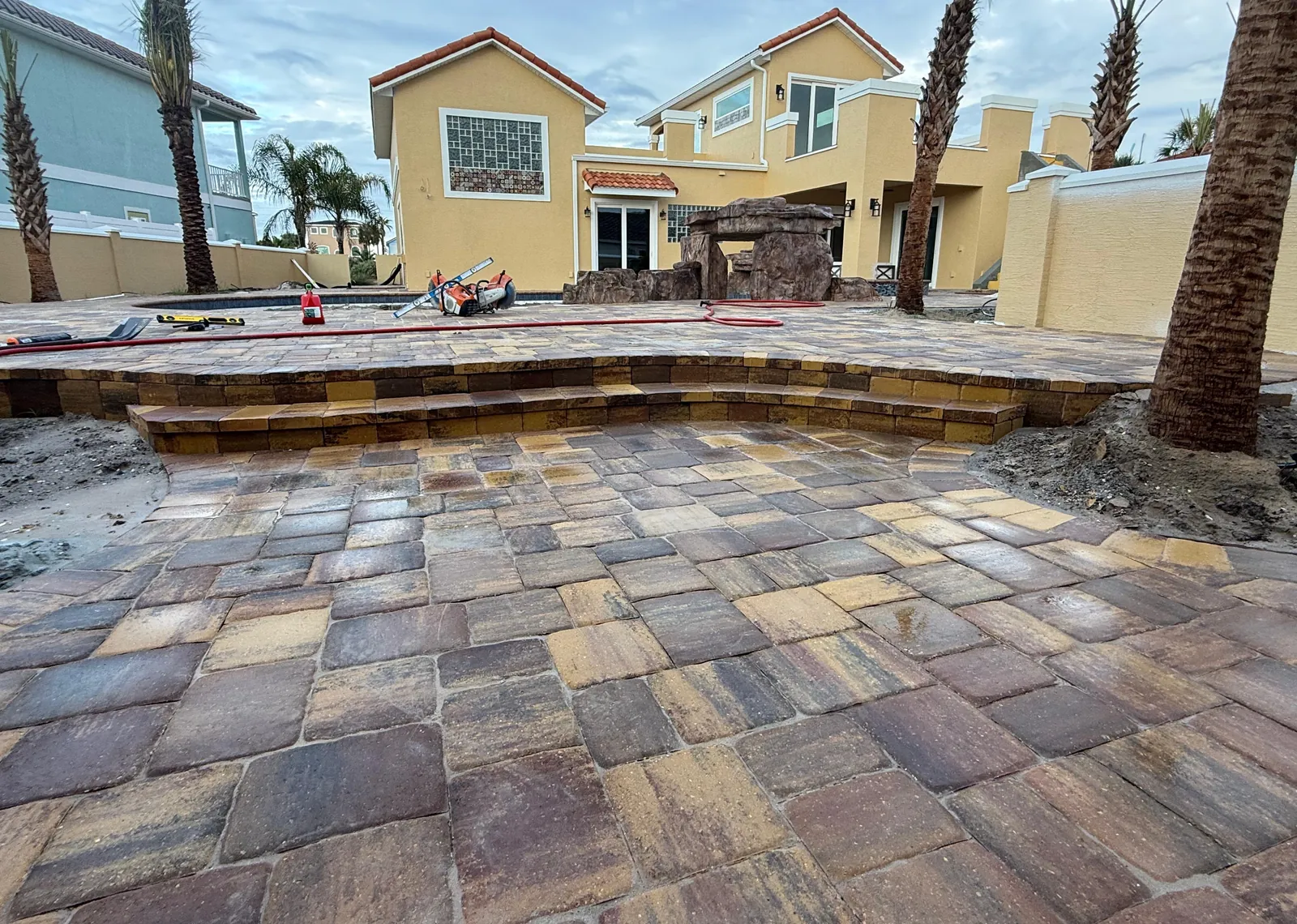
Paver Patios — recent jobs
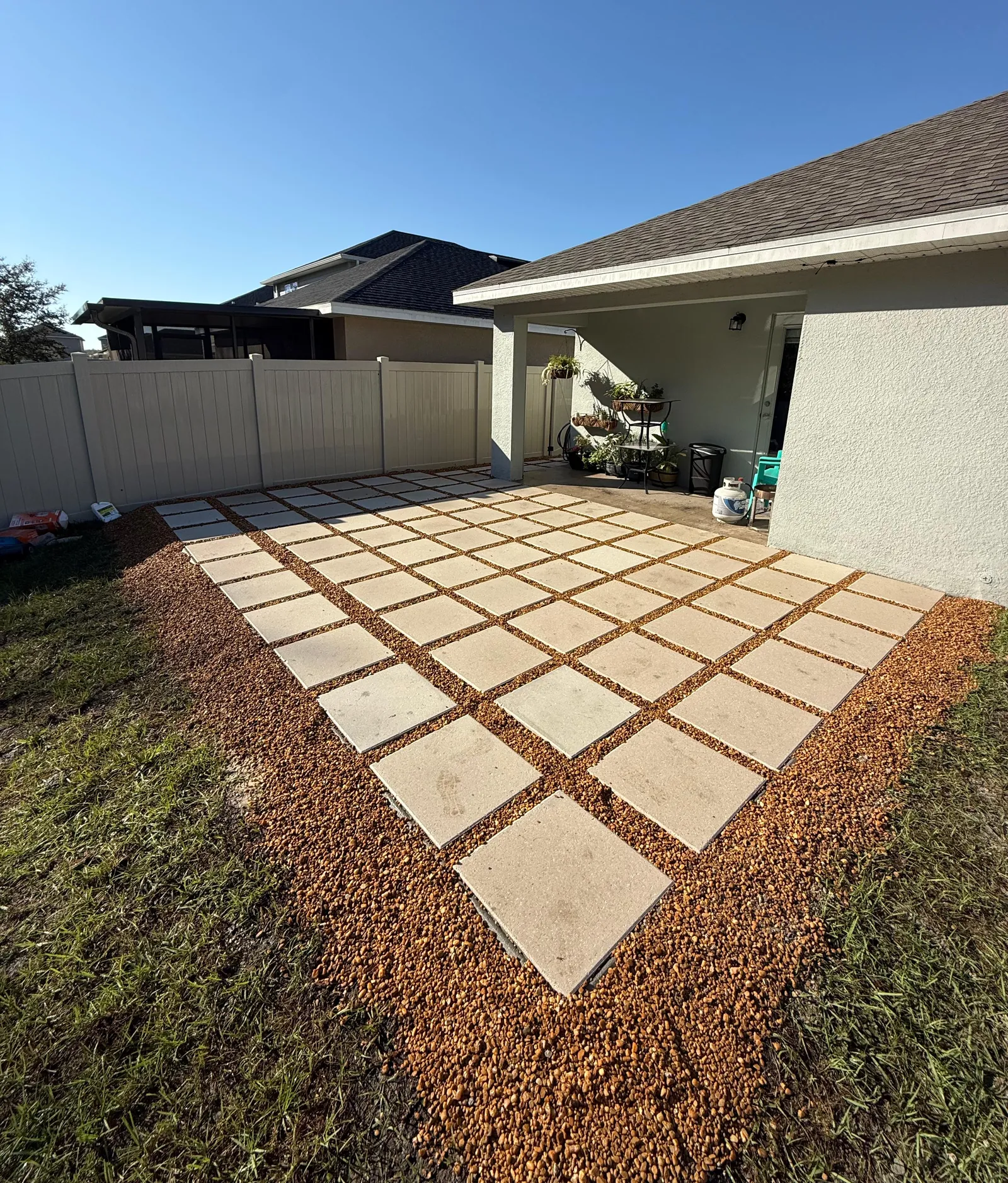
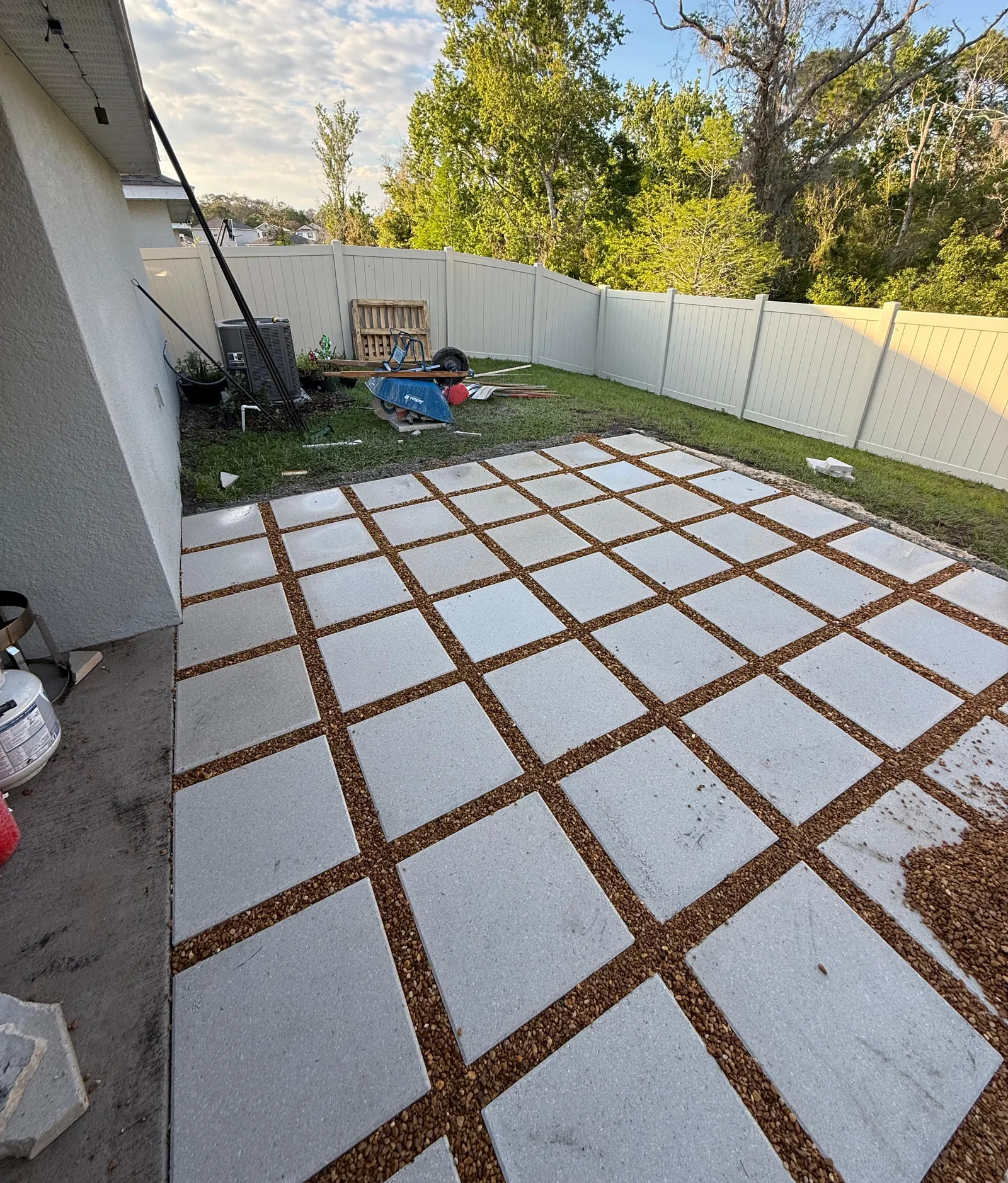
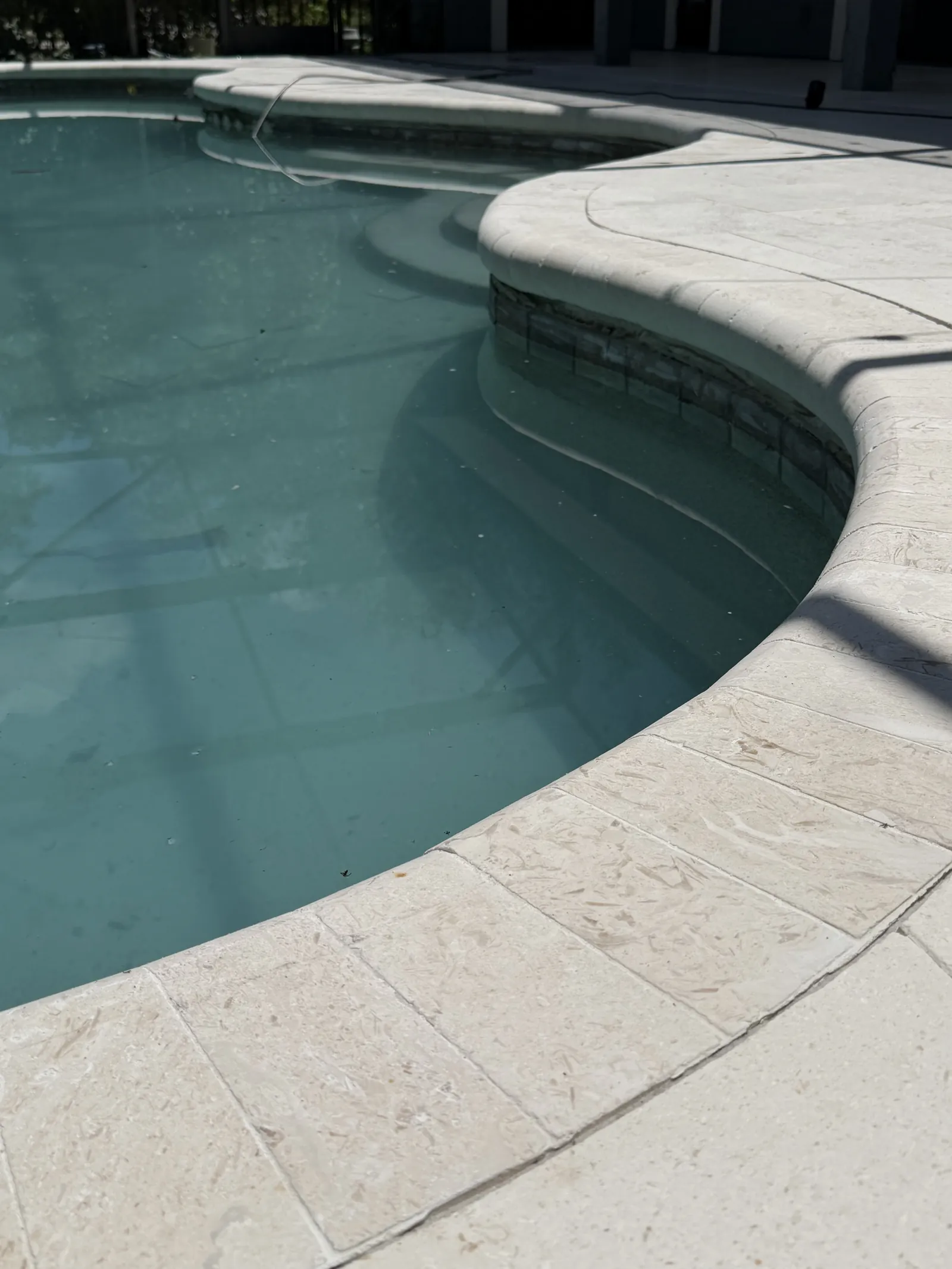
Job photos from our crews across Central Florida. Every job is planned for its own lot, soil, and truck access. Images marked "concept rendering" are illustrations of the finish, not job photos.
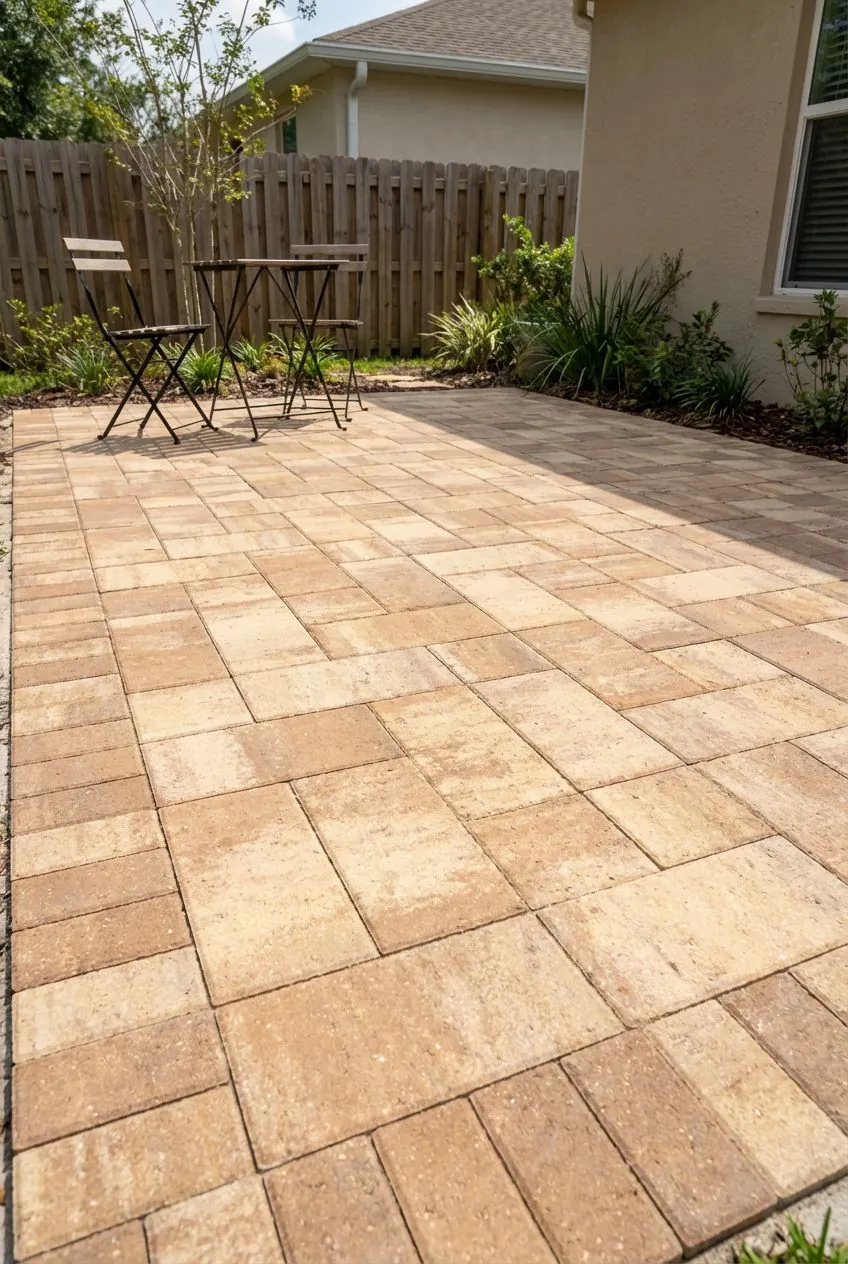 Concept rendering