
Retaining Walls
This isn't a landscaping page. A retaining wall's job is to hold soil in place against a grade change — stopping erosion, managing runoff, and keeping a sloped section of a rural lot from sliding or washing out during Central Florida's heavy summer rain. On lots with real elevation change, like the rolling terrain around Howey-in-the-Hills or sloped sections of larger Groveland-area properties, that's a structural and drainage problem worth solving correctly, not a decorative upgrade.
Figures above are published national planning ranges, not Florida-specific or site-specific quotes — wall height, length, material, and site slope all move the real number. Request a site-specific estimate.
Erosion, runoff, and standing water aren't the same problem
| Symptom | Likely cause | Typical fix |
|---|---|---|
| Soil eroding or sliding at a grade change | Unsupported slope, heavy rain runoff | Retaining wall, often with drainage behind it |
| Water pooling on a flat or gently graded area | Inadequate slope or no outlet for runoff | Corrected grading, French drain, or catch basin — not a wall |
| Driveway or slab settling near a slope | Base movement, water undermining the slab edge | Site-specific reinforcement plan, evaluated with the slope in mind |
Common slope and retaining wall questions
Do I need a retaining wall if my property has a slope or drainage problem?
A retaining wall is one tool for one specific problem: soil that's eroding or sliding because of a grade change. If your issue is water pooling on a flat area, a retaining wall usually isn't the fix — a French drain, catch basin, or corrected slope handles standing water better. If the issue is soil moving or eroding at a grade change, a retaining wall (often paired with drainage behind it) is the right category of solution. The two problems look similar but call for different fixes.
How much does a retaining wall cost for a sloped property in Florida?
$3,190–$9,203 is a published national cost range for a retaining wall, not a Florida-specific figure — wall height, length, material, and how steep the site is all move the number substantially. Sloped sites also commonly add 50% or more to labor cost compared to a flat site, since access and excavation are harder. Treat this as a planning range and request a site-specific estimate.
Can a retaining wall prevent erosion on a rural or hilly Lake County property?
Yes, that's the core engineering purpose of a retaining wall — holding soil in place against a grade change so it doesn't erode or slide, particularly during Central Florida's heavy summer rain. Areas with real elevation change, like the rolling terrain around Howey-in-the-Hills or the sloped sections of larger Groveland-area lots, are exactly the kind of site where a wall solves a real physical problem rather than serving a decorative purpose.
What drainage solutions exist for water that won't stop pooling on my property?
Channel drains, catch basins, and French drains are the standard tools for moving standing water off a flat or poorly graded area — often a better fix than a retaining wall if the core problem is water sitting still rather than soil moving. Sometimes a project needs both: a wall to hold a grade change, and a drain behind or below it so water doesn't just build up against the new wall instead.
Does a sloped driveway need different concrete thickness or reinforcement?
A driveway on a real grade change should be evaluated on its own, not assumed to follow the same 4–5 inch standard-lot spec — water flow, soil movement at the base, and how the slab ties into surrounding grade all matter more on a sloped site. See our Concrete Driveways page for the baseline spec, and treat a sloped or eroding lot as a case for a site-specific plan rather than a standard pour.
Dealing with a slope, erosion, or drainage problem?
Retaining Walls — recent jobs
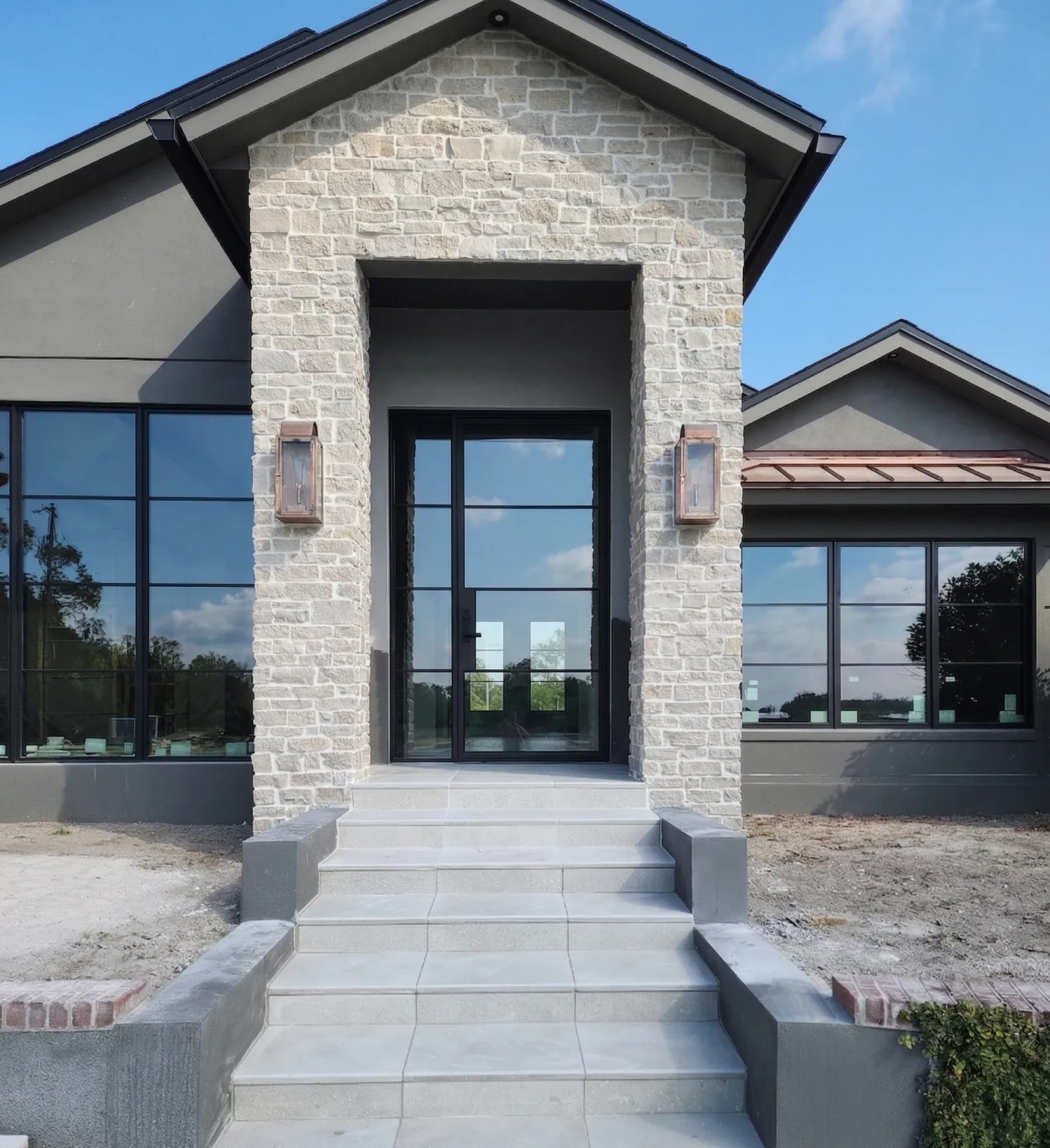
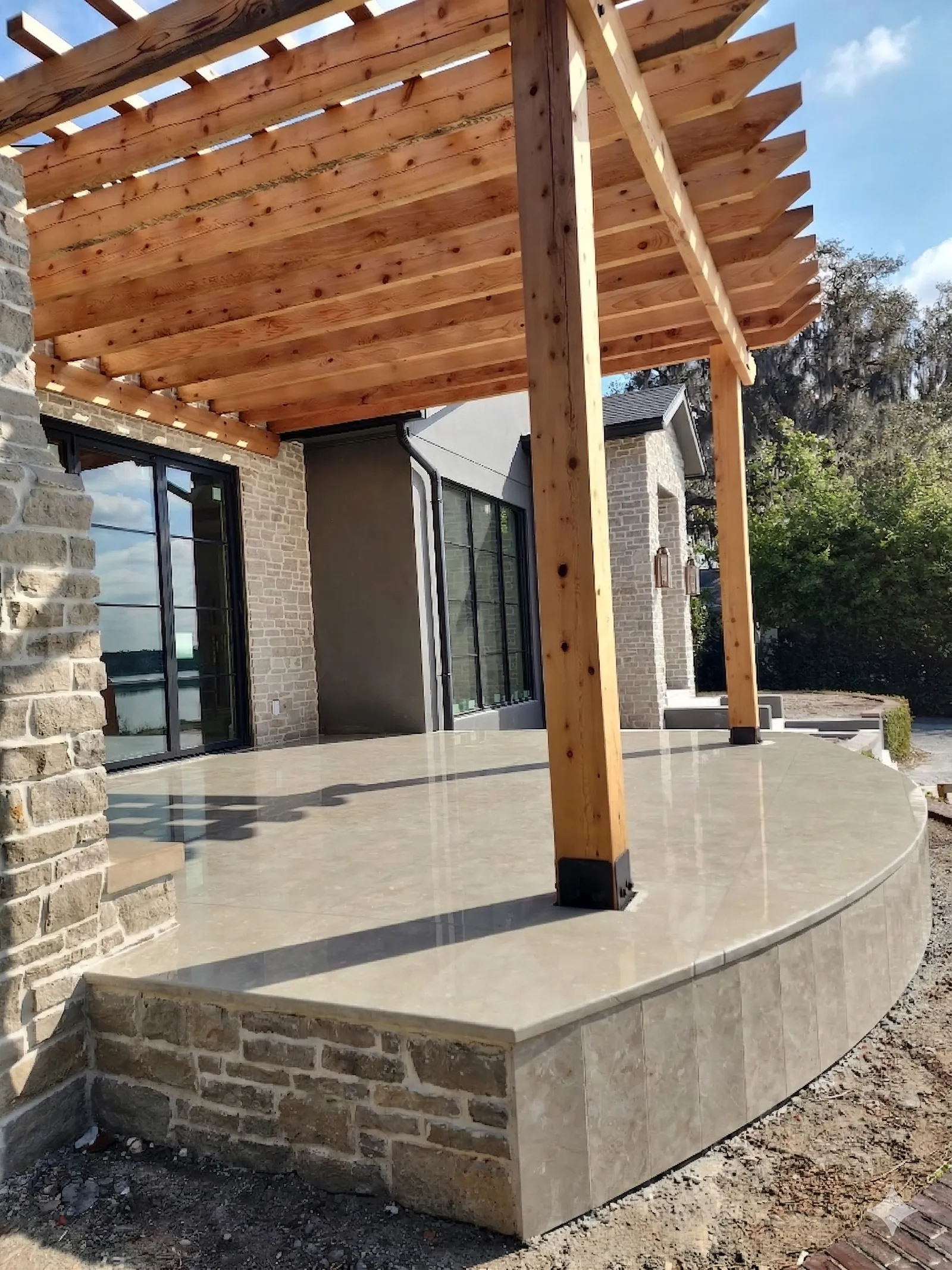
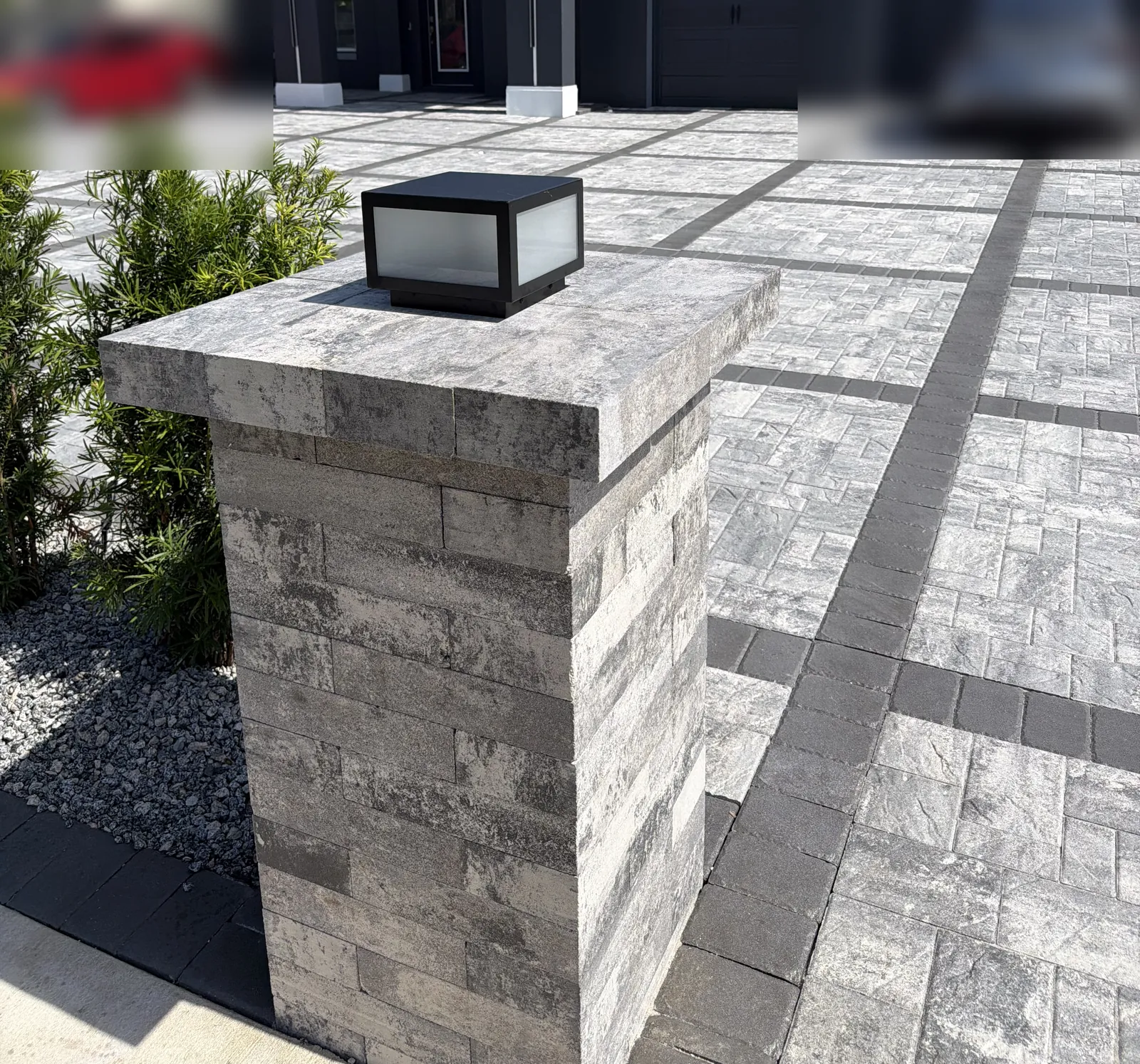
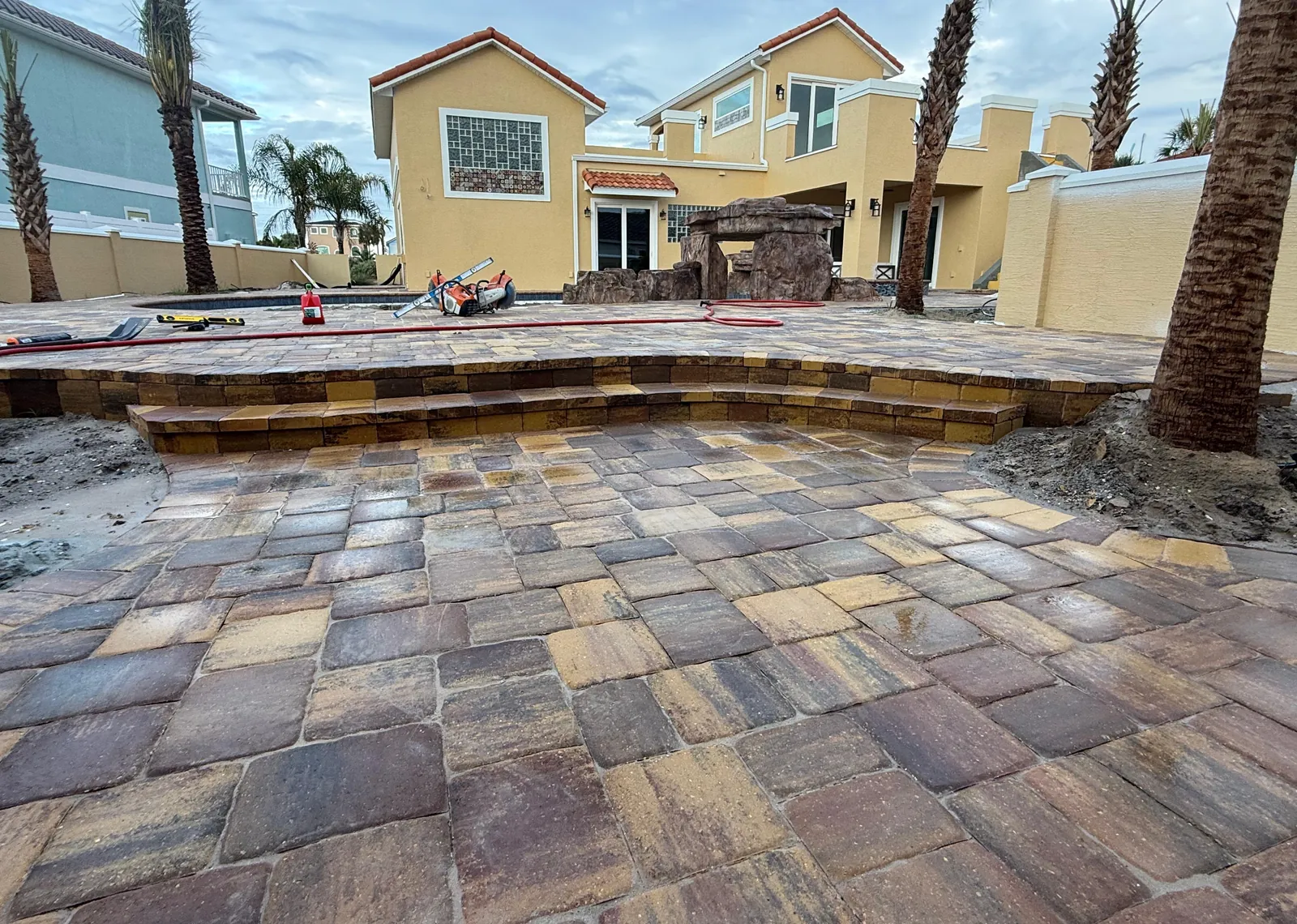
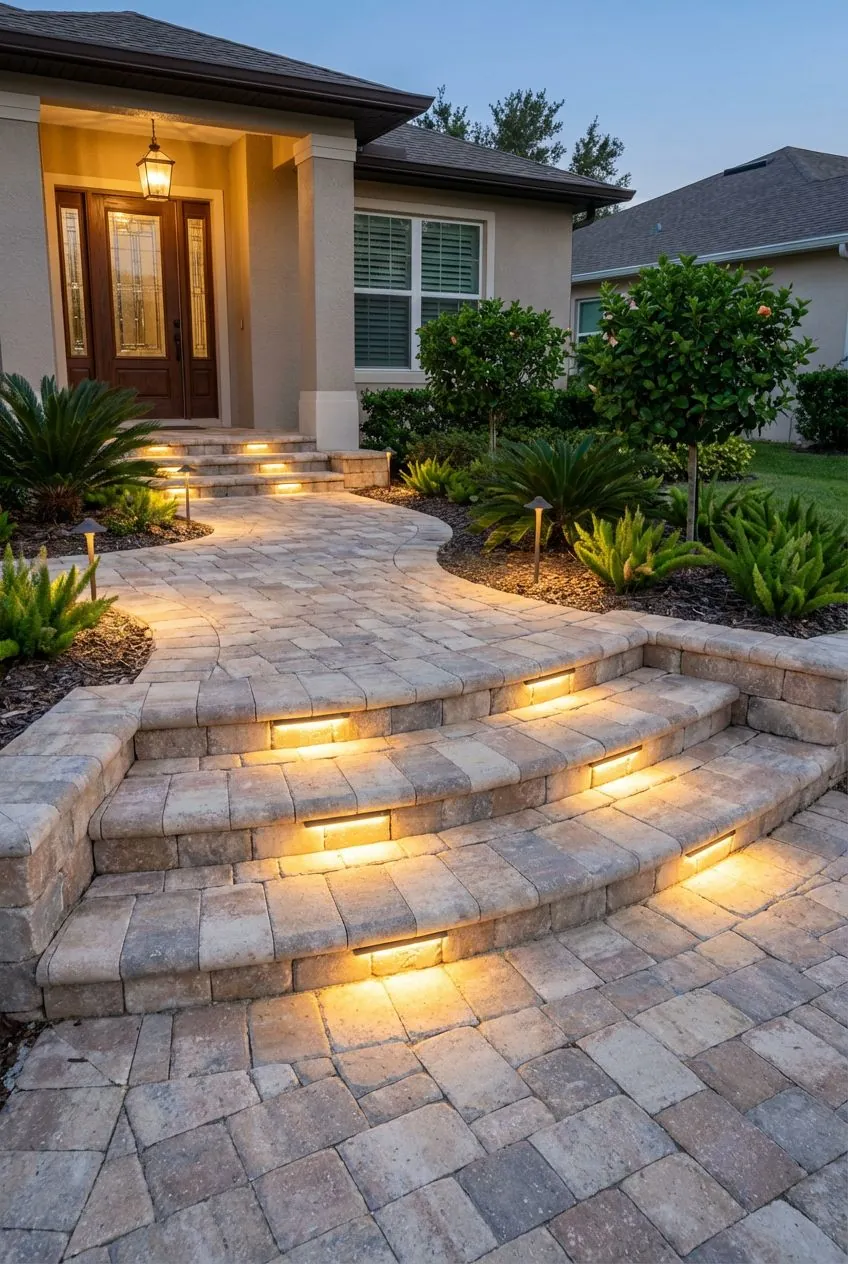
Job photos from our crews across Central Florida. Every job is planned for its own lot, soil, and truck access. Images marked "concept rendering" are illustrations of the finish, not job photos.
 Concept rendering